
- 03-7956 4267 / 011-6111 1615
- secretariat.geetaashrammalaysia@gmail.com
- Lot 6, Lorong Utara B, 46200 Petaling Jaya, Selangor Darul Ehsan.
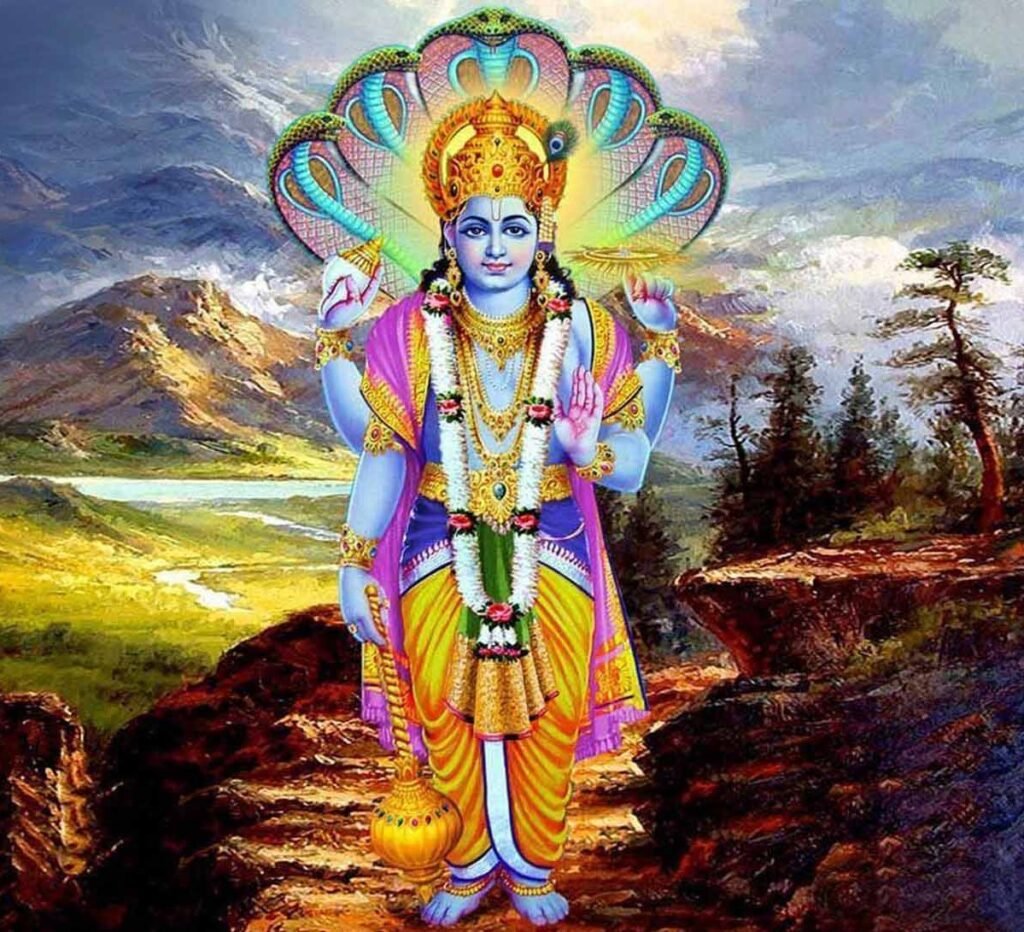
The Vishnu Sahasranama (meaning “Thousand Names of Vishnu”) is one of the most sacred and widely chanted Sanskrit hymns in Hinduism.
Dedicated to Lord Vishnu, the preserver of the universe, it is found in the Anushasana Parva of the ancient epic, the Mahabharata.
vishnu_world | Vishnu Sahasranama, Shloka 92, 93,94,95,96 …
The Narrative: The hymn is presented as a dialogue between Yudhisthira, the eldest Pandava, and the dying patriarch Bhishma on his bed of arrows.
The Question: Yudhisthira asked Bhishma who is the supreme deity is and what hymn provides the greatest path to liberation.
The Response: Bhishma responded by reciting these thousand names, identifying Vishnu as the ultimate source and protector of all.
Key Features
Structure: It consists of 108 shlokas (verses) containing the 1,000 names.
Philosophy: Each name highlights a specific attribute of the Divine, such as Viswam (the Universe itself) and Bhootha Bhavya Bhavat Prabhu (Master of past, present, and future).
Accessibility: Unlike some Vedic chants, the Sahasranama is traditionally open to everyone to recite or listen to.
Spiritual & Mental Benefits
Devotees believe that chanting or listening to the stotra regularly provides several benefits:
Mental Clarity: It is said to improve concentration, reduce tension, and foster positive thinking.
Spiritual Growth: Each name is considered a mantra that can lead to spiritual elevation and eventually Moksha (liberation).
Obstacle Removal: Practitioners often chant it to overcome life’s difficulties and find inner peace.